The Work of a Tutor

Ms. Trupti lives in the bustling city of Mumbai. She has a Master’s degree in Computer Science and has worked as a teacher for about eight years, teaching students as young as 12 to as old as 20. A couple of years ago Ms. Trupti joined Commit2Change, helping to design the standardized curriculum while also assisting the local Mumbai girls as a tutor. 

Making a curriculum is a hefty task for any educator. Ms. Trupti’s duties are even more challenging because the coursework must be clear and accessible to C2C students located in diverse parts of the country. While students in Mumbai can easily complete tasks because of the readily available resources of technology and strong internet connectivity, the students living in rural areas struggle to have the same benefits. 

Curriculum development for most educational institutions in India is based on imparting theoretical concepts to the students, usually through rote learning. C2C takes a different approach, instead aiming to give the students a more hands-on experience strongly focused on imparting confidence, communication skills, critical thinking, and creativity. 

Ms. Trupti is well-aware of the uphill battle she must face in making indifferent students (who are mostly first-generation learners) excited about technology. She knows that on the first day, the girls have little to no knowledge about technology or computer science. To begin, they watch a few animated clips from films like Ice Age and Jungle Safari. The girls enjoy the short videos, and then Ms. Trupti encourages them to ask how they are made. By the end of class, the girls not only come into contact with technology, but the seed has been planted: They are starting on the path to being creators themselves.

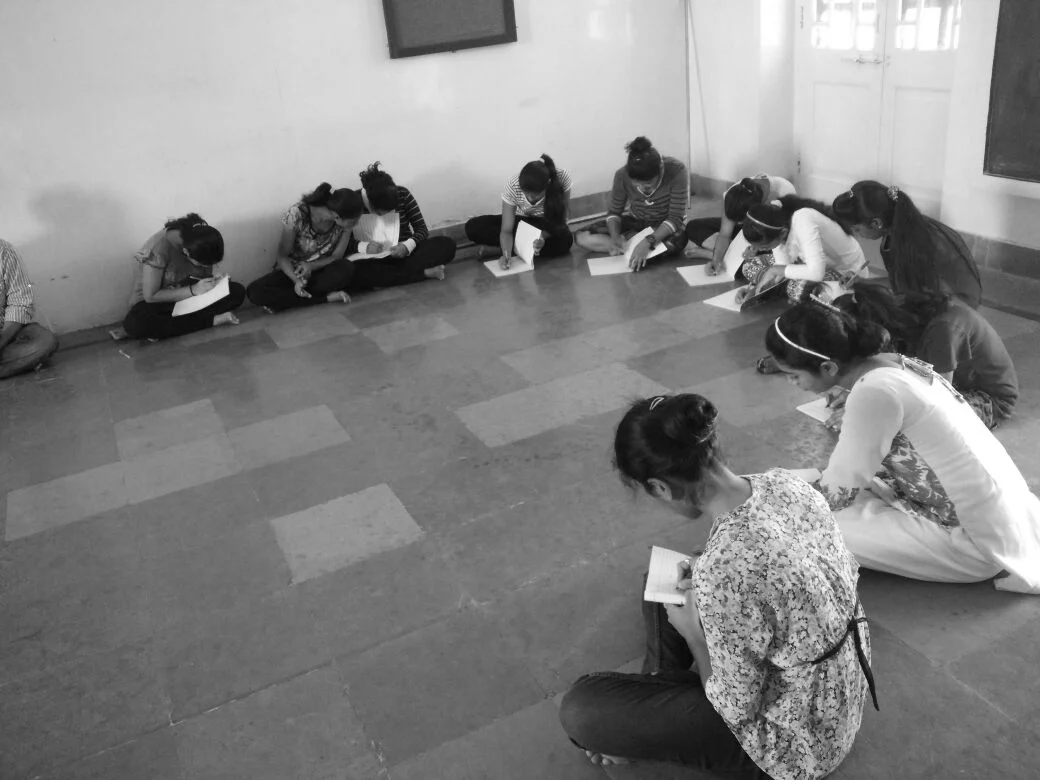
For the curriculum, Ms. Trupti starts with practicals. This first phase is educating the girls on basic knowledge about computers, including typing, turning the computer off and on, using the mouse, fundamentals of computer science and internet and using Microsoft Word, Excel and Powerpoint. Once the girls have mastered the practicals, they are ready for the next phase--coding. After that, Ms. Trupti can push the students further by introducing enhanced programming. 

In the wake of the ongoing pandemic, Ms. Trupti’s work has been more needed than ever. Thanks to Google Suite for Education, Ms. Trupti can remain connected to students and compile a repository of educational resources for the C2C students. She has found ways for the girls to practice programming when not online with the help of materials such as the workbook Hello Ruby: Journey Inside the Computer. Using textbooks like these, Ms. Trupti works to alter the exercises to be more reflective of the Indian environment, giving the girls a stronger connection to the topics and concepts. With the use of mobile devices and WhatsApp, Ms. Trupti can reach her students who have less access to technology and continue to assist them with their learning, even while sheltering indoors. She has helped students find and access apps for Microsoft Office along with informative coding apps like Scratch Jr. Her colleagues contribute to finding and sharing helpful teaching materials as well. One tutor collected a list of Android-based games for the purpose of teaching loops and sequencing, such as Programming Hero, Algorithm City, Tommy Turtle, and others. 

Like the other tutors, Ms. Trupti checks in on her students regularly and has them send her their notes online or through email. She and her fellow tutors are working to create and deliver topical quizzes through Google Forms in order to assess each student’s progress and assist any learning gaps that become evident. 

While talking to Ms. Trupti about her experience teaching, it is evident that she is quite impressed with the girls’ quick learning abilities and their drive to understand the concepts. She is amazed how much the girls have learned in one month. But the success of the students relies heavily on the patience and persistence of our tutors. Ms. Trupti is not only patient, but she is also adapting her teaching style for the changing landscape of the country. She looks forward to the day she can see her students in person again. 

During a Pandemic, A Persistence for Knowledge

It is now over five months since the spread of COVID-19 has resulted in nationwide lockdowns and slow re-openings. 

 Many companies and programs have had to problem-solve and adjust to this pandemic, discovering ways to maintain productivity while ensuring the health and safety of individuals. We recognize that a long hiatus from the classroom could risk our students falling behind, and our staff and administrators have been working tirelessly to create solutions that will hopefully carry us through these trying times. In the transition to remote learning, Commit2Change has augmented curriculum delivery with audio conferences and when necessary, sending content via WhatsApp.

Still, in order to address the needs of all the girls C2C serves, a unique challenge has arisen: How do you continue to educate the entire student body on necessary technological skills when a portion of the students lack access to the tools?  

We frequently forget that we have a device with the power of a computer that fits into our pocket: the smartphone. In India, more than 500 million people have a smartphone, and many of the girls involved in C2C live in orphanages or households that possess one. Using WhatsApp, Zoom, and Google Meet, tutors can connect to the students along with passing along assignments and helpful apps the girls can download and play on their devices.

Still, there remains the challenge that a small group of girls do not  have access to a smartphone. So how do we teach students about technology without having the tool at hand? The answer is to go back to basics. The key to learning technology isn’t just in operating the system, but in curating the programming mindset.

To this end, C2C has sent students worksheets via WhatsApp, which they reproduce and complete at home. One worksheet called Decoder consists of two circles: one with the alphabet lined around the border circumference and the other with a variety of images. The girls cut out the two circles and place the smaller on top of the larger, creating their own “code.” With their new code created, they can write words or sentences in what would appear to be gibberish to the untrained eye. They can also send their code via WhatsApp to other girls to decode. While it appears to be a simple game, this practice helps the girls understand that coding is another language, one that they must become comfortable with so they can use it with ease.

Untitled design (4).png

As the pandemic continues to affect our daily lives, we must find ways to persevere. The accomplishments we’ve seen with our girls, despite numerous obstacles, have given us hope that we will weather this storm. We look forward to the day the girls return to TechLab in person and we can proudly announce that class is back in session!

Fostering Creativity with the Scratch App

Creativity. It’s that buzzword many employers are looking for in prospective hires. But how can someone demonstrate they are creative? Furthermore, how can they acquire this skill in a school setting?

It feels contradictory to pair creativity with education. For many of us, we entered school with flourishing imaginations and got bogged down with rules and instructions. We left school “educated,” able to color within the lines.  

For C2C, this issue is even more challenging within the educational structures in place for the girls we work with in India. In a society where numerous families perceive their daughter’s potential in terms of her marriageability, how can she explore her creative potential?

Girls in C2C not only have access to computer learning skills in TechLab, but they also are given free range to explore their technological and creative prowess through apps. The free app, Scratch, allows users to create music, videos, and games while also learning coding.

When using Scratch, the girls have used the app in imaginative and inspiring ways. During one class, the instructor assigned the students the task to upload a music file and remix it in order to practice playing with the different effects of sound. While everyone got to work, one girl decided to go a different route—using her own voice. She recorded herself singing a song and uploaded it to the app. Using Scratch’s features, she remixed her voice and published the song. The tutor was so amazed that she showed the song to Kuber Sharma, executive director of C2C in India. Needless to say, he was floored. “We didn’t know that was possible!” he exclaimed. 

Another student used Scratch as a storytelling platform. She drew a character, uploaded it into Scratch, and then began writing a story to go along with her creation. The story may have initially been inspired by an example project, but as the narrative progressed it became abundantly clear that this was a story all its own, birthed from her imagination.

Creativity is crucial to an adolescent’s development and yet there are no parameters for how to teach this skill. But when providing our girls with helpful technological tools, we witness them be more daring, ready to try new things, and problem-solve any difficulties. Our students have created songs, stories, animations and other media because we provide them the instruction that they don’t need to simply color inside the lines. 

The Power of an Interdisciplinary Education

The 11th grade girls file into the Techlab classroom and each take a seat at a computer. As class commences, the instructor assigns a task: working in pairs, the students must create an animation where a ball bounces down a flight of stairs, being sure to bounce once on every step as it descends. 

This particular class is made up of rural village girls in Gujarat, India. They have already received primers introducing them to computer programming, a curriculum they have progressed through over the year. Now with their partner, they are immersed in conversation, deliberating and testing methods to complete the task. 

In their formal education in India, most of these girls attend classes divided by subject. They acquire information through memorization. But as many educators already know, this archaic form of education is not the most effective way for students to learn deeply. Consider this with your own schooling. Do you recall the information from the Chemistry test you crammed for? Or do you remember the class days where the teacher assigned you an activity you had to complete? Chances are that you hold memories of the latter.

C2C addresses the educational aspect of the girls’ lives by implementing task-based assignments that focus on student interaction and engagement. In the TechLab activity, these students rely on their knowledge of a range of subjects: trigonometry, geometry, physics. Along with this, the students must practice soft skills: communication, problem-solving analysis, and teamwork. This reliance on multiple subjects is known as an interdisciplinary approach to education. Through this, students move out of the boundaries of single-subject learning and identify connections across disciplines.

In taking the driver’s seat in their learning, students have more confidence in themselves and behave more assertively. Students do not fear making a mistake. Instead, they experiment and embrace failure, giving them the drive to persist. These are the kinds of behaviors that cannot simply be taught in the standard school system. They must be nurtured and practiced with the right educational environment.

While it is obvious these girls require a solid education in STEM subjects in order to enter a career in technology, their competency in practicing soft skills will give them a leg up in adapting to the ever-changing economic landscape. They can demonstrate an ability to connect ideas across subjects. Creativity is not only for the arts. Problem-solving is not specifically for a math question.

By the end of the ball animation lesson approximately 80% of the students have achieved the task. They have used different strategies, some of them more efficient than others, but they have demonstrated their ability to face a task and devise a course of action.

At the end of class, the girls are abuzz with excitement at what they have achieved. Student Hetalben Mohaniya says it best: “Everyday I learn new things in computer lab.”

COVID-19 Updates

Covid-19 Activities

Three months ago, the COVID pandemic sent most of the world into lockdown. While many countries are opening businesses to reinvigorate the economy, this school year has come to an early end. But while we at C2C continue to follow the guidelines of social distancing, our concern is for the health and safety of our young girls in India and finding ways for them to forge ahead in their education while remaining vigilant against this pandemic.

In India, the lockdown has been called one of the harshest in the world, shutting down travel along with businesses, factories, and schools. Starting on March 25th, the orphanage and rescue homes where C2C operates have remained closed until early June. Most of the young women in our program remain onsite and C2C continues to provide critical support for basic necessities like accommodation, food, and clothing. As an economic downturn looms over the horizon, we are working closely with our partners as we expect to see a growing need for essential items.

With school closed during the pandemic, the C2C staff have improvised effective short-term solutions. We are working with the orphanage administrators to mitigate the effects of missed learning on the girls’ future academic performance, graduation rates, and employment prospects. Because of unreliable internet service, virtual learning is not consistently effective in India. In lieu of this, we are engaging the girls in independent learning through worksheets and activities accessible without technology, including some lessons that can be conducted via free telephonic service. Some technological learning has been made available through apps and programs like Mindspark-Maths for STEM subjects and Bolo for English and language skills. We continue regular, virtual trainings for our teachers and we are actively designing lesson plans for the coming year, focusing on any educational gaps caused by the pause in schooling.

Like the rest of us, the girls are doing their best to cope with the quarantine measures and relieve their anxiety over the risk of contracting the disease. From attending seminars about effective handwashing to practicing social distancing, the students have learned how to reduce the chances of contagion. Some of the girls with sewing skills have donated their time to making protective masks for the local hospitals.

These are challenging times that represent an unprecedented risk for girls’ education worldwide. At C2C, our commitment to girls’ education and empowerment remains strong. We will weather this health and economic crisis. We hope you will continue to support us during this difficult time. Rest assured that once this quarantine lifts, C2C will be ready to resume at full speed, providing holistic educational services to the most vulnerable of girls.

Welcoming a Baby Girl

In early November 2019 one of C2C’s partners, the Infant Jesus Children’s Home, greeted a new baby girl at their rescue home in Bangalore, India. Anita had been abandoned by her parents at just 24 days old. The program staff welcomed her with open arms and they tell us that Anita is happy, healthy and very active -- in spite of her HIV-positive status.

All the children at Infant Jesus Children’s Home have been abandoned because of their HIV status. The parents and guardians who give up these children are typically unable to care for them due to extreme poverty and other life circumstances. The parents are often sick themselves.

India has the third-largest HIV epidemic in the world, behind South Africa and Mozambique. In 2017, HIV prevalence among adults was an estimated 0.22%. This figure is small compared to many other countries but because of India's huge population, this equates to 2.1 million people living with HIV. Children with HIV are more likely to be orphaned, and the stigma related to the disease can reduce access to treatment and basic civic amenities like education.

Since 2000, the Indian government has made impressive progress in curbing the spread of HIV disease. Government funding even provides country-wide free medication to those who are infected. But many HIV-infected children do not receive government support for things like schooling, nutrition, housing and other supportive services due to lack of regulations and bureaucratic hurdles.

That’s where C2C steps in and provides these vital services for girls at the Infant Jesus Children’s Home through our Education & Holistic Support Program. With proper treatment, HIV can be a chronic, manageable illness. We believe these girls deserve a chance to overcome their disease, and we know they can serve as role models in their communities if given the opportunity through education.

The difficult context in which the girls are educated makes their successes all the more inspiring. Just last month a C2C-sponsored girl at Infant Jesus, successfully passed her 10th Standard exam -- the US equivalent of graduating high school. She is now attending a computer course and excited to find a job and support herself. Two more C2C-sponsored girls are preparing for their 10th Standard exams in early 2020. Many more, younger adolescents are showing initiative and progress in various stages of their studies.

We are proud of these girls! With critical aid from our supporters, we are doing our part to provide an enriching, supportive, stigma-free environment to help the girls reach their full potential, in spite of their HIV status.

*Name changed for confidentiality

**More on Infant Jesus Children’s home can be found here.

A Forgotten Story To Inspire The Forgotten Girls

Anandi Gopal Joshi. How many of you have heard her name? She was an Indian girl, who wed young as customary at the time, but came to America to become the first Indian woman with a Western Medical degree. Forget about glass, Anandi shattered a concrete ceiling! She defied everything that was the norm at the time. She broke through a caste system and should be a leader and role model for so many women worldwide. But she’s been forgotten…

Why Educating One Indian Girl Can Transform a Community

Why Educating One Indian Girl Can Transform a Community

Education is always a controversial policy issue, and rightly so. The tangible effects that education can have on a country’s development are astronomical. For developing countries, education is a gateway and a means to address systemic issues, like gender inequality. The Economic Times of India reports that gender parity can boost India’s GDP by over 27 percent, based on research done by the International Monetary Fund.

The Cycle of Uneducated Mothers

According to the Census of India 2011, female literacy is at 65.46% while the male literacy is at 82.14%. Compared to boys, lesser girls are enrolled into schools and many of them drop out. Numerous economical, social and even political factors are to be held accountable for this distressing result. One of the most obvious, yet least spoken about contributing factor is the parent's, especially the mothers' level of education.

 Studies continue to show that children's educational performance is linked to their parents' level of education. Having well-educated parents would be that the household income is higher, enabling the child to attend better schools, equipped with a high quality of life. Education parents also means that they are likely to stay married longer, before having children, meaning they would have worked on their relationship communication skills, and would raise a child in an emotional sound environment. 

 However, the effects of uneducation do not boil down to this entirely, as studies have shown that a mother's education may be the most defining factor in a child's upbringing. Why mothers? Since we want to focus on girls getting educated, it is important we look at the repercussions of girls not benefiting from an education system and the setbacks in the society due to it. The cycle of uneducation prevails; an uneducated girl is more likely to get married early due to societal and cultural norms outside of her control, and similarly, have children soon in the marriage. This very lack of social/cognitive functions have crucial consequences on a child, especially a girl. A study done by Foundation of Child Development shows that low level of education in a mother can significantly impact a child's level of economic status, educational success and their health. 

 An educated mother can help curate cognitively stimulating activities to enhance a child's academic potential. They are more equipped to help the children with tests, exams and homework. Educated mothers are also more likely to encourage a child to partake in extra-curricular activities, those not necessarily linked to academic excellence but rather the growth of their social-cognitive abilities. They can also provide tips to increase or better their performance at school without coming across patronizing, as well as become excellent role models for younger girls to look up to.

 So, what can we do to break the cycle and enable more girls to take up education?

  • Changing the negative attitude towards a girl's education can help. In the Indian society, the girls are not expected to make any economical contribution to the family and so, the environment for a girl to get educated is incredibly unhealthy. 

  • Unlocking a girls potential by increasing her self-esteem growing up. A good level of self-esteem can help a girl push through some of the tough times in her academic path and also, make her proud of her work.

  • To continue to increase awareness about the importance of girl's education. The more we talk about this issue, the more we do, and thus, reduce the prejudice about education.

 While we cannot overcome this struggle overnight, our restlessness to create change, our efforts to change the conversation and the fight to continue on despite the setbacks, will bring the positive growth in girls education that we hope to see. 

 Help us unlock some of their potential today by contributing here or maybe even donating some of your time! It's never too late to start the process of change. 


References- 

https://onlinelibrary.wiley.com/doi/full/10.1111/jomf.12156

https://www.fcd-us.org/assets/2014/07/Mothers20Education20and20Childrens20Outcomes20FINAL.pdf

Written by Ruwi Shaikh, a content strategist living in Brooklyn.

IWD2019- On Our Way To Empowerment.

"What makes you feel empowered?"

 This International Women's Day, we want to focus on empowerment. What makes a woman feel empowered and why is this so essential? While attitudes are changing, women still face a considerable amount of issues. For instance, three in ten people globally (30%) pick out sexual harassment as the top issue facing women, which is in line with findings in 2018 when the figure was 32%. 

 More often than not, the culture we are a part of has the utmost demands from a woman. The societal standards are patriarchal in nature, which has adverse and negative effects on the way a woman lives her life. These norms can be worse depending on the culture or the society you are a part of. In most parts of India, women aren't allowed to speak in front of men, women must dress "decently" always and ask the permission of their husbands before leaving the house. The statistics aren't so good either. According to National Crime Records Bureau, in 2016, over 58,000 rapes were reported across India. In Delhi, the capital of India, almost 4,000 sexual harassment cases were reported in the same year. 

 Changing dynamics, however, means that women have to learn to protect and empower themselves in the spaces men would have dominated before. Among the few things women can do is learn to empower themselves emotionally and mentally. 

 When the world seems bleak, or rather, we seem to be losing hope, it is important to continue to do little but significant things in our lives to uplift ourselves. On top of our daily lives, we also face an abundance of ongoing news from all platforms such as Instagram, Twitter and Facebook. Switching off from these can be hard to do when most of us rely on them to keep in touch with our family and friends. However, such news can often leave us feeling empty and confused, while questioning our self-worth. 

 For this article, I interviewed some of our very own women in the Commit2Change team. Commit2Change is founded and run by women, and it is because of our education and persistence that we are here today. We recognize that thousands of girls do not get the same opportunity and that is why we urge you to donate so women can continue to inspire other women to do their best. 

Gayathri Segar says, "Taking ownership of a project, professional or personal - and seeing it through to its succesful completion. The sense of satisfaction in taking something from start to finish is incredibly empowering." 

Being help responsible for a project, as Gayarthri put across so well, can help boost the self-esteem because you are accountable to make a certain project come alive. Whether it's the next big presentation at work or simply buying groceries to cook yourself a hearty meal- finding ownership in the little things one does can help feel empowered. 

 Sanwari Gupta believes in putting in her 100% to everything she does. She says, "I may not be able to become anything I want to be, but I can be a whole lot more of what I am." She continues to try to apply this to everything she does and claims there is nothing more empowering than that. 

Shruti Ganguly pipes in to say that the endless possibilities make her feel empowered. The notion of possibilities would mean having the hope and desire to make change happen, to make the space for positivity and growth. 

 Sumana Setty and Kiran Rai mentioned freedom and love as their tools to reach a level of empowerment in their lives, which could mean various things to different people, but we do know one thing for sure: love is freedom, through love we can find healing, compassion, care and growth. 

We need to continue to show such compassion towards women right's- because while we have achieved a considerable lot in our time, there's still mountains to climb and rocks to turn. We can do it, by being mindful allies to women, and continue to support the causes that can help drive the society forward.  

Happy IWD from the Commit2Change team, and Women's History Month. Stay strong, stay empowered. 

Donate to commit2change today and help us help women!

Written by Ruwi Shaikh, a content strategist living in Brooklyn.


Weekend City Walks

Weekend City Walks

“Girls don’t last long on the streets, they are either picked up by Social Workers or Pimps.” The contrast is stark, yet understandable in a city that has some of the worst female violence cases in India.  It is so fortunate for the girls who end up at a place like SBT.  It is my hope, through this work that enough people can be empowered in the future to help these girls find a better path.

Hyderabadi Adventures

Hyderabadi Adventures

Over the past week or so I have been staying in Nagole, which is a suburb of the South Indian city Hyderabad, where our partner Center for Social Service (CSS) is located...

What amazes me about CSS is how driven the girls are there. In order for a girl to be accepted into CSS, they have three criteria: 1) They must be semi or full orphans 2) They must be economically disadvantaged and 3) They must have a zeal for education and betterment.

Alyssa, our Field Operations Manager heads to India

Alyssa, our Field Operations Manager heads to India

I have now been in Bombay for my Commit2Change Field Visit for the past two and half weeks and the experience have been nothing but lovely. I am in no way a stranger to India, having lived here for a total of 3 years in many different areas.

Crafting Designer Ritu Patel Empowers Female Villagers through Embroidery

Fifteen years ago, a chance encounter forever altered the course of Ritu Patel’s life, as well as the lives of hundreds of Indian villagers. While visiting family on the Indo-Pakistani border, Patel stumbled into a room where an artist from the remote Indian village of Kutch was creating intricate murals on the walls using mud and tiny mirrors. Struck by the man’s craftsmanship and finesse, she recognized she could help alleviate the villagers’ endemic poverty by translating their traditional handiwork into goods the modern world would consume. And in that room, Craftings was born. 

“I was so fascinated by his work, but I realized that my generation of people doesn’t want to be associated with the villages because they find them very outdated and boring,” she said over coffee in New York, where she’d recently showcased her work through Commit2Change. “That was my challenge. How can I make it modern so that the villagers can improve their livelihood? This artist was dying for work and he had so much skill.”

Patel began her career in graphic design, but after having two daughters, she realized the work left her feeling drained and unfulfilled. “I realized graphics was not what I wanted to do. I wanted to do something more meaningful,” she said. So she decided to visit the villages and revive their art form. Her Goal was to revive the lost tradition and revive these dying arts by adding a contemporary touch and syncing them with today’s lifestyle.

At first Patel hired villagers to create their customary mirror work on decorative trays and picture frames, but it wasn’t until she discovered their inimitable embroidery skills that Craftings really took off. She began to place orders with the villagers for bolts of painstakingly embroidered fabric she herself would transform into modern garments.

“It started off as a small exhibition, and it became a rage” Patel recalls. “Suddenly, I had buyers from all over the world wanting my goods.” But when business was at its peak, the designer had to make the incredibly difficult decision to close shop. She realized that with the amount of travel and hours she was pouring into Craftings, her own young daughters were being neglected. And so for more than a decade, her work with India’s poor villagers was put on hold. Fast-forward to the present, and Patel, now an empty nester, was free to dedicate herself to Craftings again in good conscience. But when she revisited Kutch, she was alarmed to realize the village women hadn’t had any outside work since she last collaborated with them for Craftings. This is largely because of their isolation, both coincidental and enforced. Patel said, women aren’t allowed to travel from one remote village to the next. A great distrust of outsiders, as well as a deeply patriarchal culture, besets these communities. Patel, though, had earned the villagers’ trust. For weeks at a time, she’s lived among her employees in their nomadic conditions, eating meals with them and gaining their confidence. They now call her "Ritu Ben,” “Ben” meaning “sister.” The fact she’s helped to provide them with regular income hasn’t hurt, either.

“I’m like their Santa Claus,” she laughs. “When I go to the villages, all of them come in hoardes. ‘Give us work, give us work!’ they say, because they know I’m somebody they can trust.” and work she gives them. Patel commissions embroidery from the villagers in certain colors that she then transfers onto pure silks and crepes hand-selected from Bombay, ultimately making her hand-drawn designs as individualized as possible. She and the villagers only make twelve items of each design, and they’re as sumptuously gorgeous as they are unique. Currently, Craftings works with seven villages, including one specializing only in gold thread work, and Patel hopes to expand that number soon. Prices for the collection range from $120 up to $350, depending on the amount of embroidery that’s gone into an item.

“See this one,” Patel says, pointing at a coral dress covered in swirling blue stitching. “It took the woman one year to do the embroidery on that garment. She’d work about two hours a day on it.” When it comes to payment, the designer says she always offers the women the highest possible premium to ensure they’re motivated to work. Between child rearing, housekeeping, and caring for their animals, free time in which to embroider is sparse, but irrefutably worthwhile. Craftings has singlehandedly enabled many of its 120 female workers to bring plumbing and electricity into their homes, and Patel especially hopes her business will help bolster future prospects for girls. Two percent of the proceeds from every garment is set aside expressly for the upliftment of the girl child, and Patel soon hopes to begin paying her female workers partially with bonds so they have more autonomy over their earnings. “I’m just very passionate about uplifting women and giving back to society,” she concluded. “I feel I have a short life left and I don’t want it to be meaningless. There’s much more I can contribute before leaving this world.”
https://www.facebook.com/Craftings-By- Ritu-Patel