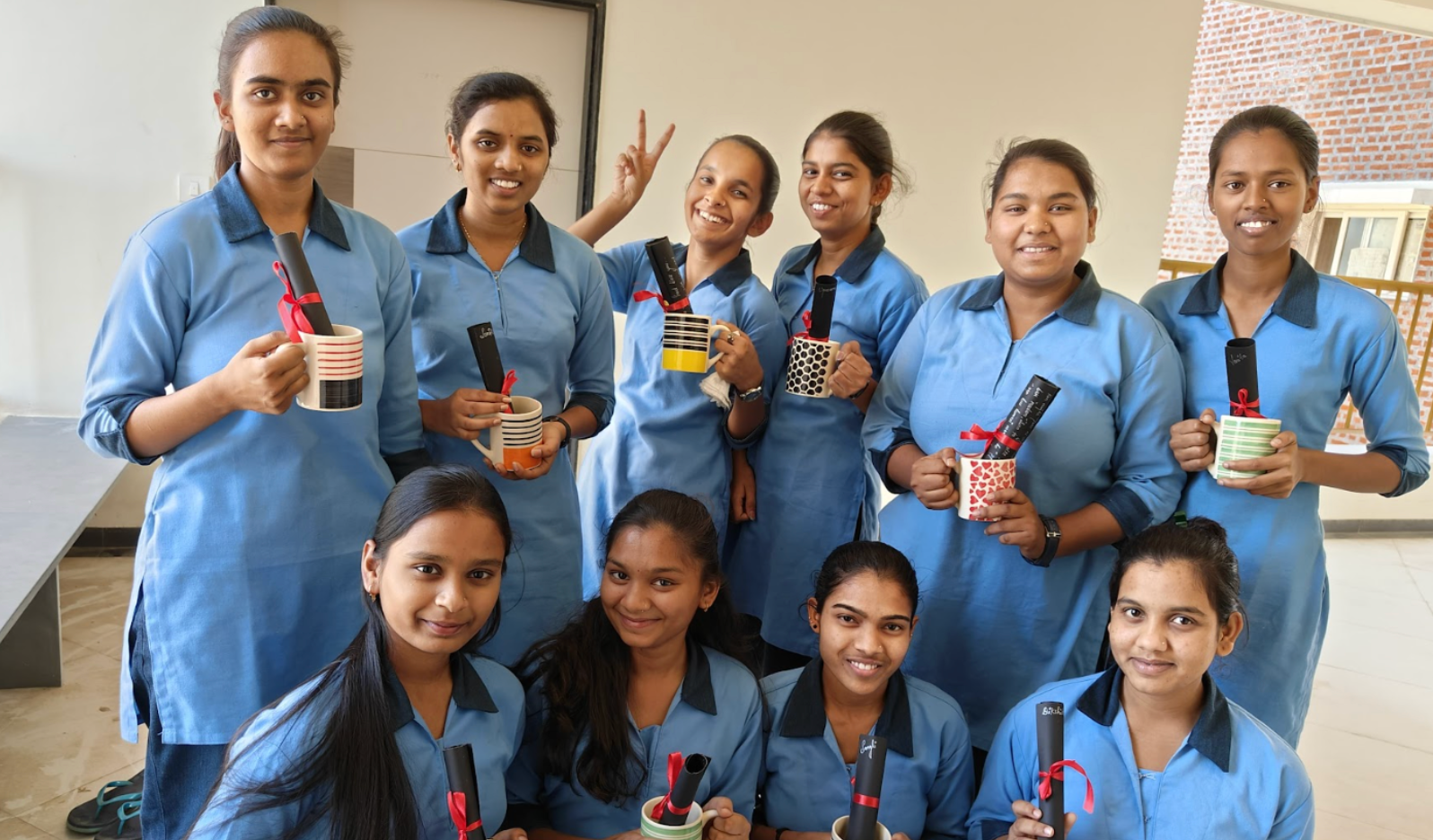
High School girls at C2C partner center in Gujarat
For more than 16 years, C2C has worked to expand educational opportunities for underserved girls in India, Bangladesh and Nepal. We have always believed that education can change the trajectory of a young woman’s life. But we have also seen that education creates its greatest impact when girls have the skills, resources and connections to turn what they have learned into opportunity.
That experience has shaped the next chapter of C2C’s work: creating a stronger connection between education and opportunity.
For the girls we serve, this means going beyond helping them stay in school or complete their education. It means ensuring they have the confidence, digital skills and career preparation they need to take their next steps toward higher education, employment and greater economic independence.
Our workforce development programs are helping us put this approach into practice.
Preparing Girls for the Modern Workplace
One example is our partnership with Celegence in Hyderabad, where we recently completed a small workforce development pilot. Celegence provided laptops and the technology infrastructure needed for four girls to complete an intensive 135-hour curriculum focused on preparing them for employment.
The program went beyond traditional job training. The girls developed resumes and LinkedIn profiles, received extensive interview preparation and gained experience with AI tools that are increasingly becoming part of today's workplace.
The results are encouraging. Two of the four girls are already employed -- one with Celegence and another with a different company. The other two are working with a C2C recruiter to identify employment opportunities that match their skills.
While this was a small pilot, it showed us the potential of combining education with technology, career preparation and connections to employers to create a stronger pathway to opportunity.
Building a Pathway to Employment in Gujarat
We are seeing similar results on a larger scale through our partnership with a Vocational Training Center in Gujarat.
Approximately 300 girls have already completed the program, and another 250 are currently enrolled. The curriculum is designed around both the needs of the girls and the local employment market. It includes workplace English, including phonetics and commonly used workplace phrases; financial literacy; digital literacy and foundational technology skills; AI and other workplace technologies; and interview preparation and other employment-readiness skills.
Digital literacy is particularly important. Before girls can take advantage of more advanced AI and workplace technologies, they first need to be comfortable with basic digital tools.
The center's location near an industrial area also creates an opportunity to connect the girls' training more directly with local employers and available jobs.
The results have been promising. More than 60% of the girls who have pursued employment after completing the program are now employed. C2C is continuing to support the remaining graduates who are seeking work as they pursue employment opportunities.
Building Skills and Credentials
Our work south of New Delhi takes another approach to helping girls make the transition from education to employment.
The girls first completed the 135-hour workforce development curriculum and then participated in an additional 150 hours of training to prepare for professional certification exams. The goal is to help them build both the practical skills and industry-recognized credentials that can strengthen their position in the job market.
The results of this effort are still unfolding. Today, 15 girls are actively seeking employment with support from a C2C recruiter who is connecting them with potential employers and opportunities.
What Happens After the Classroom?
These programs represent an important next step in C2C's work. For many years, our focus has been on making sure that underserved girls have access to education and the support they need to succeed academically. That work remains at the heart of what we do.
But we are now asking a broader question:
What happens after the classroom?
How do we help girls translate their education into greater opportunity, including employment? How do we ensure they have the digital skills, confidence, credentials and professional connections that employers are looking for?
Our workforce development programs are beginning to answer those questions.
The Hyderabad pilot, the Vocational Training Center in Gujarat and the South Delhi program each take a different approach, but they share a common goal: connecting education to opportunity.
This is an important part of C2C’s future as we continue building partnerships that give girls not only the education to succeed, but also the skills, resources, confidence and connections they need to turn that education into meaningful opportunity.
Ultimately, we want education to do more than help a girl succeed in the classroom. We want it to give her the skills, confidence and agency to build a future of greater opportunity for herself, her family and her community.